Can You Be Held Liable If Someone Slips on Ice on Your Sidewalk in Colorado Springs?
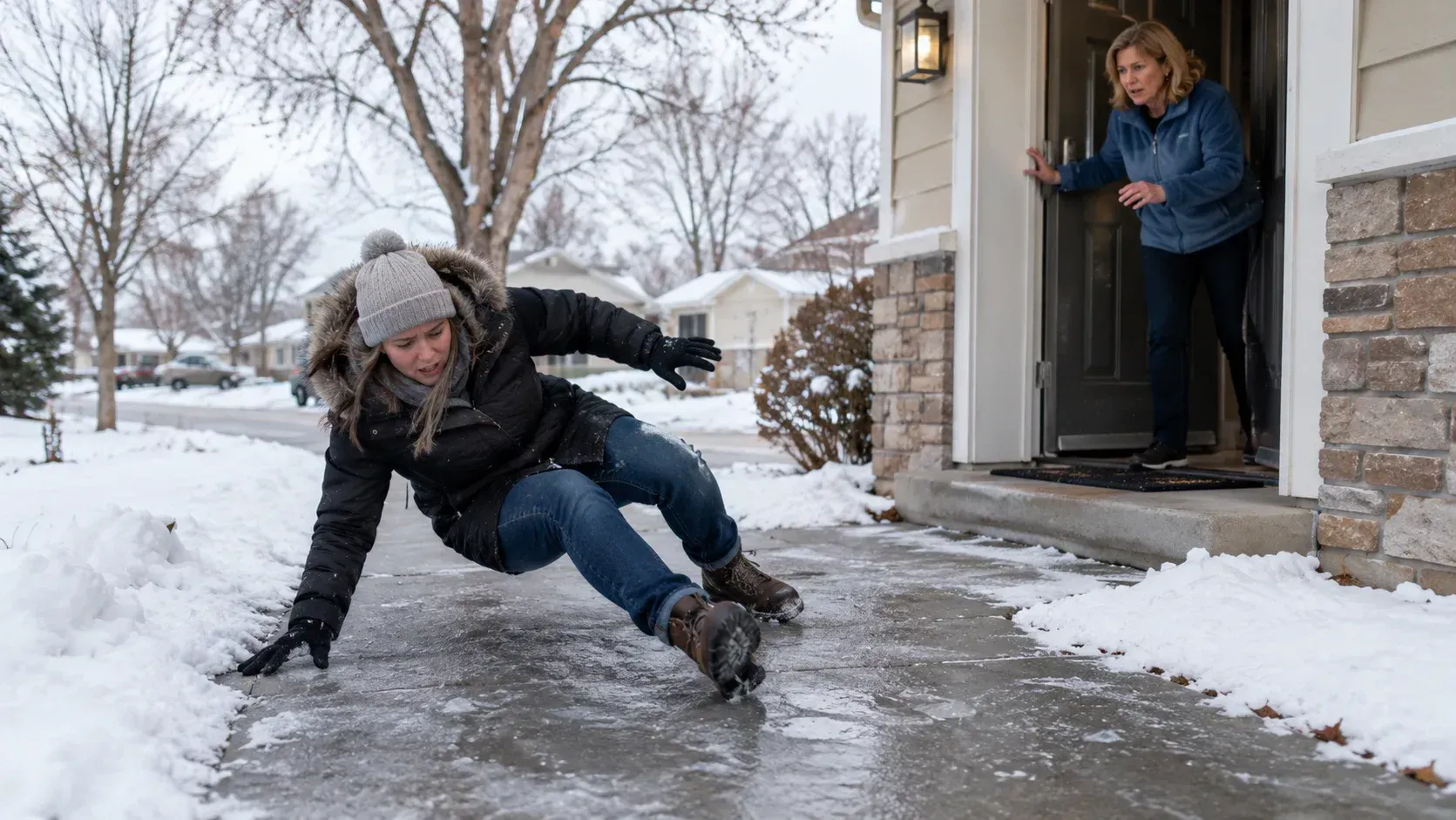
Table of Contents
- Introduction
- Who Is Responsible When Someone Slips on Ice
- Sidewalk Ice Liability Rests on Two Separate Duties
- The Refreeze Problem Behind Most Claims
- What Reduces Your Sidewalk Liability
- Commercial Property Carries More Exposure
- Conclusion
- Set Up Snow and Ice Service Before the First Storm
- Legal Disclaimer
- Frequently Asked Questions
Key Takeaways
- Property owners in Colorado Springs are generally required to clear snow and ice from the public sidewalk abutting their property within a set time after snowfall ends.
- Failing to clear it, combined with a pedestrian injury, can expose the owner to a premises-liability claim.
- The municipal duty and the liability question are two different things, and you can satisfy one and still face the other.
- Most claims come from refreeze, not from the original snowfall.
- A record of when you cleared and treated a surface is the most useful thing you can have afterward.
Introduction
Yes, you can be held liable if someone slips on ice on your sidewalk in Colorado Springs. Property owners are generally required to clear snow and ice from the public sidewalk abutting their property within a set time after snowfall stops, and failing to do that, combined with a pedestrian injury, can support a premises-liability claim against the owner.
The clearance deadline is set by municipal code and differs across the towns in this area, so confirm the window for your address with your city. What does not differ much is the pattern behind the claims, and it has less to do with the storm than with what happened two days later. Keeping ahead of it is the whole point of a snow and ice removal plan.
Who Is Responsible When Someone Slips on Ice
The duty generally attaches to the property, not to the person who happens to be living there. That means an owner usually cannot hand it off by assumption.
A few consequences follow from that:
- Renters and landlords. Who clears the walk is often decided by the lease, but the municipal duty typically sits with the property. Read the lease, then read the ordinance.
- Travel and vacancy. Being out of town for the storm does not pause the deadline.
- Hiring a contractor. Delegating the work does not usually delegate the duty. It does give you a service record, which matters a great deal afterward.
- Corner lots and long frontages. More sidewalk means more duty, including the curb ramps at intersections in many jurisdictions.
The required width and the deadline both come from your municipality, and they vary across Colorado Springs, Cimarron Hills, Falcon, Fountain, Castle Rock, and the unincorporated county. There is no single Colorado rule to rely on.
Sidewalk Ice Liability Rests on Two Separate Duties
Clearing the walk on time and avoiding a liability claim are two different obligations, and people routinely assume the first one settles the second
| The municipal duty | The liability question | |
|---|---|---|
| Who sets it | Your city or county code | Premises liability standards |
| What it asks | Clear within a set time, to a set width | Act reasonably to address a known hazard |
| How it is measured | Did you clear it in time | Did you know, or should you have known |
| What it costs | A code violation | A personal injury claim |
| Clearing on time | Satisfies it | Helps, but does not end it |
A sidewalk cleared inside the deadline and then glazed over by meltwater that night can still produce a claim. The ordinance asks whether you shoveled. The claim asks whether the surface was reasonably safe and whether you knew it was not.
That is why documentation beats a clean walk at a single point in time. One is a photograph. The other is a pattern.
The Refreeze Problem Behind Most Claims
Most slip claims come from refreeze rather than from fresh snow, because fresh snow is visible and refrozen meltwater is not.
The Front Range sets this up almost perfectly. Daytime sun melts snow piles and south-facing roofs. Temperatures drop after dark. Water that ran across a walk at 3pm is a sheet of clear ice at 9pm, on a surface that looks swept.
Where it tends to form:
- Downhill of a snow pile that is melting during the day
- Below a roofline, gutter, or downspout that drains across the walk
- At the bottom of a sloped driveway apron
- In shaded sections that never get sun, next to sections that do
- Across curb ramps where meltwater collects before the drain
Black ice is the hazard people do not report before they fall on it. That is also what makes a treatment record valuable: it shows you addressed a surface that looked fine.
Where the snow pile sits is part of the same problem. Pile placement, and whether snow can legally go into the street at all, is covered separately inwhat the rules say about pushing snow from your driveway into the road.
What Reduces Your Sidewalk Liability
Clear early, treat refreeze, and write down when you did both.
In practice:
- Clear within your city's window, and find out what that window actually is before the first storm.
- Clear the full required width, not a single shovel path down the middle.
- Treat the surface after clearing, especially shaded sections and anything below a downspout.
- Go back the same evening on sunny days. That is when the refreeze forms.
- Pile snow where the melt runs away from walks, not across them.
- Keep a log. Date, time, what you cleared, what you treated. A phone note is enough.
- Photograph the cleared walk after a storm. Timestamps do real work later.
- Keep contractor invoices and service records. A seasonal agreement that documents every visit is worth more than a memory.
- Fix what causes the melt, such as a downspout draining across the sidewalk.
None of this guarantees nobody falls. It changes what the record looks like if someone does, and in a disputed claim the record is most of the argument.
Commercial Property Carries More Exposure
Commercial properties face more exposure than homes, for a simple reason: more people cross the surface, and the expectations are higher.
What changes:
- Higher foot traffic means a higher chance a hazard is encountered
- Customers and tenants are generally owed a greater duty of care than a passerby on a residential walk
- Parking lots, entrances, and ADA access routes all come into play
- Business insurance carriers often expect documented snow and ice procedures
- A missed clearing is more likely to be witnessed, photographed, and reported
For commercial sites, a seasonal agreement that produces a dated service record after every snowfall is doing two jobs at once. It keeps the property open, and it builds the documentation a claim will ask for.
Conclusion
Treat the sidewalk as your responsibility and the refreeze as the real risk. The ordinance tells you when to shovel. The liability question asks whether the walk was reasonably safe and whether you knew it was not, and those come apart most often on a sunny afternoon followed by a cold night. Clear it, treat it, write down that you did, and deal with whatever is draining across the concrete. Confirm your deadline with your city, since it is not the same everywhere around here.
Set Up Snow and Ice Service Before the First Storm
If keeping ahead of refreeze is not realistic on your schedule, that is what a service plan is for. Sticky Nicky's Mowing and Property Services clears driveways, sidewalks, and entryways and provides ice management to reduce slip hazards on walkways, on seasonal agreements or one-time service. Snow removal consultations are free. Call (719) 238-8194, Monday through Saturday, or tell us which walks need covering at your property in Colorado Springs.
Legal Disclaimer
We are a property service, not attorneys. This article describes how sidewalk clearing duties and premises liability generally work, and it is not legal advice about your property or your situation. Municipal requirements, including clearance deadlines and required widths, differ across Colorado Springs, El Paso County, Douglas County, and Teller County, and they change. Confirm the requirements for your address with your city or county, and consult an attorney licensed in Colorado and your insurance carrier about any actual incident or claim.
Frequently Asked Questions
Am I responsible for the public sidewalk in front of my house?
In most Colorado Springs area municipalities, yes. Owners are generally required to clear snow and ice from the abutting public sidewalk within a set time after snowfall ends. The deadline and the required width come from your city's code, so confirm them for your address.
Can I be sued if someone slips on my sidewalk?
Yes, it is possible. A premises-liability claim generally turns on whether the surface was reasonably safe and whether you knew, or should have known, about the hazard. Clearing on time helps your position but does not by itself end the question.
Does hiring a snow removal company transfer the liability?
Usually not. The duty tends to stay with the property. What a contractor does give you is a dated record of every clearing and treatment, which is often the most useful evidence in a disputed claim.
What if I was out of town during the storm?
The deadline generally does not pause for travel. Arranging coverage before you leave, through a neighbor or a seasonal agreement, is the practical answer. Being away is rarely treated as a reason the walk went untreated.
Why does ice keep forming after I shovel?
Refreeze. Daytime sun melts snow piles and roof runoff, the water crosses the walk, and it freezes after dark into clear ice on a swept surface. Treat shaded sections and anything below a downspout, and check again the same evening.