Does Homeowners Insurance Cover Damage From a Tree That Falls During a Colorado Windstorm?
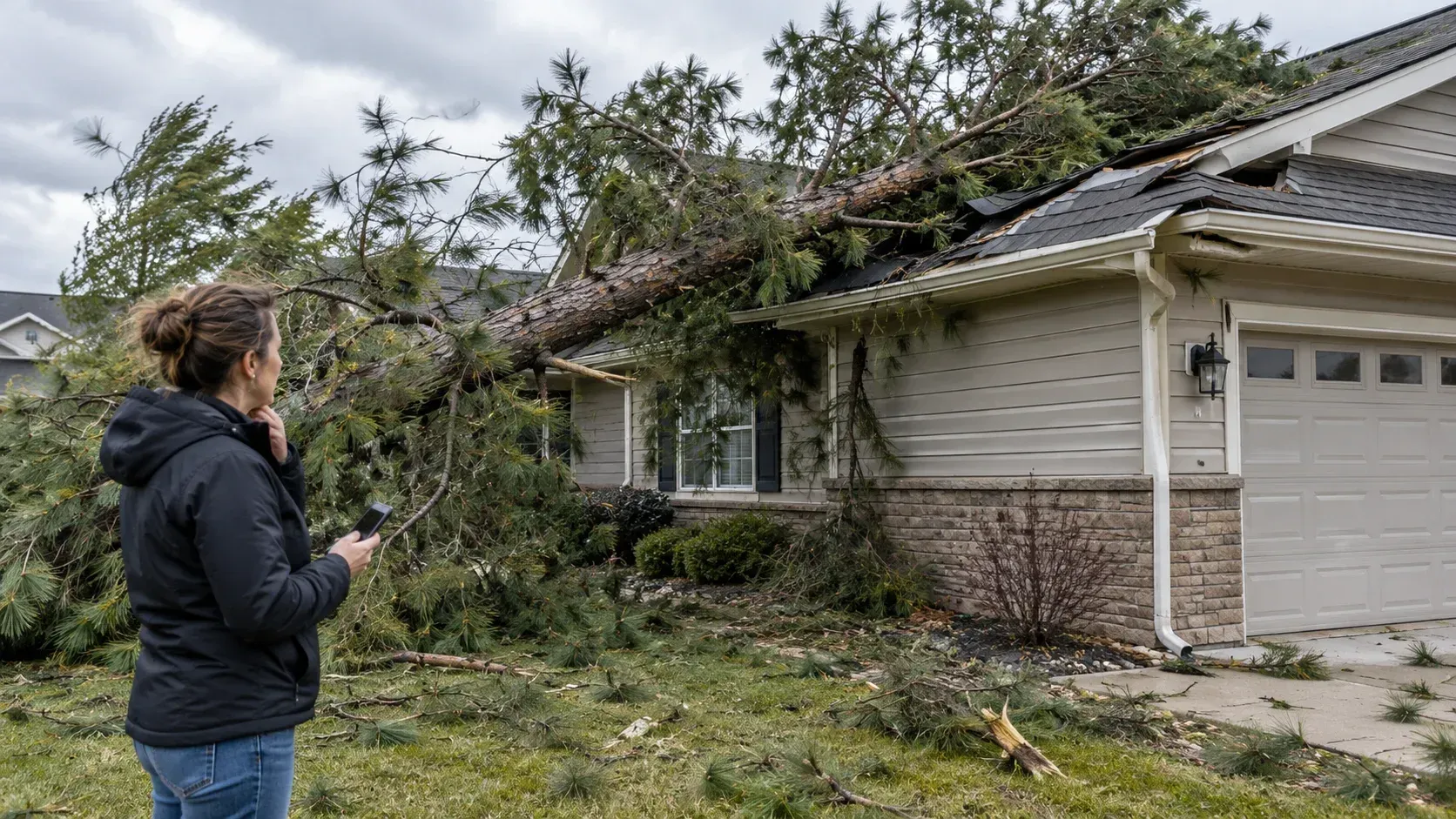
Table of Contents
- Introduction
- What Insurance Usually Covers When a Tree Falls During a Windstorm
- Where Windstorm Tree Damage Claims Get Denied
- What If the Tree Hits Nothing?
- Homeowners Insurance Tree Damage: The First 48 Hours
- The Part You Control Before the Storm
- Conclusion
- Schedule a Tree Health Check Before the Next Windstorm
- Insurance Disclaimer
- Frequently Asked Questions
Key Takeaways
- Most standard policies cover tree-fall damage from a windstorm when the tree strikes an insured structure such as a house, garage, or fence.
- Insurers can deny the claim if they determine the tree was already dead, diseased, or known to be hazardous.
- A tree that falls and hits nothing is often not covered, or covered only up to a small debris-removal limit.
- The condition of the tree before it fell is the single biggest variable, and it is the one you can document in advance.
- Your carrier is the authority on your policy. Nothing on a contractor's website changes what your coverage says.
Introduction
Most standard homeowners policies cover damage from a tree that falls during a windstorm when the tree strikes an insured structure, such as your house, garage, or fence. The common exception is a tree the insurer determines was already dead, diseased, or known to be hazardous before it fell, which can shift the claim from a covered weather event to a maintenance problem.
That distinction decides most of these claims, and it is settled by the condition of the tree rather than the strength of the wind. Which is why tree trimming and removal is worth thinking about as claim documentation, not just yard work.
What Insurance Usually Covers When a Tree Falls During a Windstorm
Wind is a named peril on most standard policies, and damage to covered structures from a tree falling in a wind event is generally within that coverage.
What typically falls inside it:
- Damage to the house itself, including the roof and walls
- Detached structures such as a garage, shed, or fence, often under a separate limit
- Personal property inside the structure that was damaged
- Removal of the tree from the damaged structure
- Additional living expenses if the home is not habitable
What sits in a different place in the policy:
- A vehicle crushed by the tree, which generally goes to the comprehensive coverage on your auto policy rather than your homeowners policy
- Landscaping and the replacement of the tree itself, which is usually limited or excluded
- Debris removal when nothing was struck, which often carries a small sublimit of its own
Your deductible still applies, and on some policies wind damage carries a separate, higher deductible than other perils. Worth checking before storm season rather than during it.
Where Windstorm Tree Damage Claims Get Denied
Claims get denied when the insurer concludes the failure was predictable rather than sudden. Everything below feeds that conclusion.
| Situation | Usually covered | Often disputed or denied |
|---|---|---|
| Tree condition before it fell | Healthy, no visible defects | Dead, decayed, or visibly failing |
| Prior notice | Nobody raised a concern | A neighbor, arborist, or city had flagged it |
| Weather | Genuine wind event | Ordinary breeze, no storm on record |
| What it struck | House, garage, fence, shed | Nothing, or only the lawn |
| Owner response to known issues | Acted on an assessment | Knew and did nothing for seasons |
The phrase that does the work here is "knew or should have known." A tree with obvious deadwood, a trunk cavity, fungal growth at the base, or a new lean is a tree the insurer will argue you could see from the ground. A structurally sound tree that came down in a strong downslope wind event is a different conversation entirely.
Front Range conditions matter in both directions. Strong wind, heavy wet spring snow, drought stress, and beetle damage all make failures more common here, which cuts both ways: the weather is a credible cause, and it is also a reason an insurer expects you to have been paying attention.
What If the Tree Hits Nothing?
A tree that falls and hits nothing is usually the homeowner's expense. This surprises people more than any other part of the topic.
If the tree lands in the yard, across the driveway, or on the lawn without striking a covered structure, most policies either exclude removal entirely or cover it only up to a modest debris-removal sublimit. The reasoning is that no insured property was damaged.
Two situations sometimes change that:
- The fallen tree blocks a driveway or a handicap ramp, which some policies address specifically
- The tree came down on a neighbor's property, which is a separate question with a separate answer, covered in what happens when a branch from your tree lands on a neighbor's property
Ask your agent where your policy's debris-removal limit sits. It is usually a small number, and it is usually a surprise.
Homeowners Insurance Tree Damage: The First 48 Hours
Document before you clean up. Everything else follows from that.
- Make the property safe, and stay away from anything near a power line. Utility first, always.
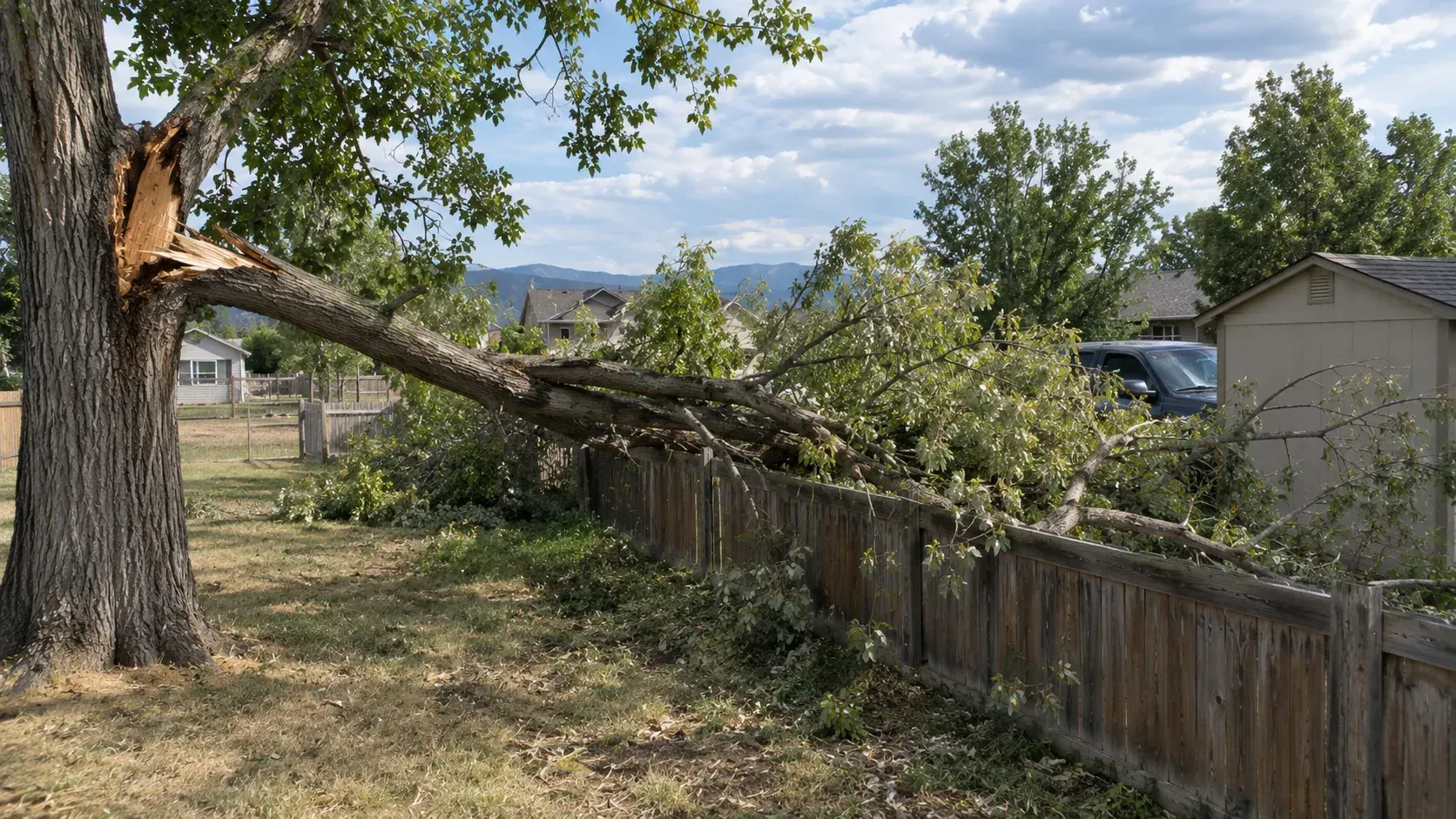
- Photograph everything before a single branch moves. The tree, the damage, the broken surfaces, the root plate, wide shots and close shots.
- Photograph the stump and break point. This is the evidence of whether the wood was sound or rotten, and it disappears once the tree is hauled away.
- Call your carrier and open the claim before arranging permanent repairs.
- Make reasonable temporary repairs to prevent further damage, such as tarping a roof, and keep the receipts.
- Keep every invoice, including emergency removal.
- Hold off on permanent repairs until the adjuster has seen it, unless your carrier says otherwise.
That third step is the one people skip. A clean break through sound wood supports your claim. Rot through the center supports theirs. Once the debris is gone, the argument is whoever's memory is more confident.
The Part You Control Before the Storm
You cannot control whether a tree falls during a windstorm. You can control what the insurer finds when they look at it.
Practical steps that hold up:
- Walk your trees before storm season and note anything that changed
- Clear deadwood and hanging limbs before they become the exhibit
- Keep dated invoices for trimming and removal work
- Get a professional assessment if a tree looks questionable, and act on it
- Respond in writing if a neighbor raises a concern, rather than letting it sit
- Know which trees on your lot are near the house, the garage, and the fence line
A paper trail showing you inspected, acted, and paid for the work is the difference between a weather claim and a maintenance dispute. It costs very little compared with a roof.
Conclusion
Coverage usually comes down to one question: was the tree healthy before the wind took it? A sound tree that falls in a genuine storm and hits your house is close to the textbook covered claim. A dead one the neighbors had been mentioning for two years is a harder case, and no amount of wind speed fixes that. Walk your trees before the next big blow, deal with what you find, and keep the receipts. That is the part of this you actually control.
Schedule a Tree Health Check Before the Next Windstorm
If a tree near your house, garage, or fence line looks questionable, have it looked at while the weather is calm. Sticky Nicky's Mowing and Property Services will evaluate your trees and give you an honest recommendation, whether that means trimming, removal, or leaving it alone. Call (719) 238-8194, Monday through Saturday, or send us the details about the tree. We work across the communities around Calhan and Colorado Springs.
Insurance Disclaimer
We are a tree and property service, not insurance professionals. This article describes how standard homeowners coverage generally treats tree damage, and it is not a statement about your policy or a promise of coverage. Policies differ, endorsements change things, and your carrier is the authority on what you are covered for. Ask your agent directly how your policy handles tree damage, wind deductibles, and debris removal, and involve your carrier before arranging permanent repairs.
Frequently Asked Questions
Does homeowners insurance cover a tree falling on my house in a windstorm?
Generally yes. Wind is a named peril on most standard policies, and damage to the house or a detached structure is usually covered, subject to your deductible. The main exception is a tree the insurer determines was already dead, diseased, or a known hazard.
Who pays if the tree was already dead?
Often the homeowner. If the insurer finds the tree was visibly dead or decayed and nothing was done, the loss can be treated as a maintenance issue rather than a weather event. Dated trimming invoices and assessments are what push back on that finding.
Is tree removal covered if the tree hits nothing?
Usually not, or only up to a small debris-removal sublimit. Most policies tie removal coverage to damage of an insured structure. Ask your agent what your specific limit is, since it tends to be lower than people expect.
What if the tree falls on my car?
That generally goes to the comprehensive coverage on your auto policy, not your homeowners policy. Report it to your auto carrier. If the same tree also damaged the house or fence, you may be opening two claims at once.
Should I clean up before the adjuster arrives?
Make the property safe and take temporary steps to prevent more damage, but photograph everything first, including the stump and break point. Keep the debris where practical until the claim is open, and save every receipt.