How Do You Know If Pet Waste Buildup Is Attracting Pests to Your Colorado Springs Yard?
Key Takeaways
- The clearest signs of pests drawn to pet waste are more flies than usual, rodent activity near the yard, ants or other insects around waste, and a lingering odor.
- Pet waste buildup can attract pests because it offers moisture, odor, and food residue, and the problem tends to grow the longer waste sits.
- Warm weather speeds up odor and fly activity, while snow cover can hide waste until it thaws in spring.
- Regular removal on a consistent schedule is generally more effective than occasional large cleanups.
- Pet waste can carry bacteria and parasites, so cleanup habits and hygiene matter. Questions about health risks are best directed to a veterinarian or your local health department.
Table of Contents
- How Can You Tell If Pet Waste Is Attracting Pests? A Direct Answer
- Why Pet Waste Draws Pests
- Signs to Look For in Your Yard
- How the Colorado Climate Changes the Picture
- What Pet Waste Buildup Can Mean for Your Household
- A Realistic Scenario
- A Simple Way to Check Your Yard
- How Often Should Pet Waste Be Removed?
- Common Misunderstandings About Pet Waste
- What General Online Advice Tends to Skip
- Conclusion
- Frequently Asked Questions
Introduction
You can usually tell pet waste buildup is attracting pests when you notice more flies than normal, ants or other insects gathering around waste, signs of rodents nearby, or a strong odor that lingers in parts of the yard. Staying on top of cleanup with regular pet waste removal is one of the most direct ways to reduce those conditions before they grow into a bigger problem.
This matters to homeowners and business owners in Colorado Springs and Calhan because waste left in a yard does not simply break down and disappear. It can attract insects and other pests, make outdoor space less pleasant to use, and create a hygiene concern for people and pets who spend time there.
The sections below explain why waste draws pests, which signs are worth watching for, how Colorado weather affects the situation, and how to build a routine that keeps buildup under control.
How Can You Tell If Pet Waste Is Attracting Pests? A Direct Answer
In plain terms: Increased fly activity, insects clustering around waste, rodent droppings or burrows near the yard, and persistent odor are the most common signs that pet waste buildup is drawing pests. Seeing one sign does not always confirm a pest problem, but several together usually point to it.
The most reliable approach is to look at your yard as a whole instead of at one spot. Pests tend to show up where food, moisture, and shelter overlap.
One Sign vs. a Pattern
A few flies on a warm afternoon are normal. A steady cloud of flies near the same corner every day, combined with odor and visible waste, is a stronger signal that buildup is the cause.
Why Pet Waste Draws Pests
Pet waste is organic material that holds moisture and gives off odor as it breaks down. To many pests, that combination is an easy source of food or a place to breed.
Flies
Flies are commonly drawn to decaying waste and may lay eggs in it, especially in warm weather. This is why fly numbers often climb during summer if waste is left sitting.
Rodents
Rodents can be attracted to food residue, and some pet waste contains undigested food. A yard that already has easy shelter, such as clutter or overgrown areas, can make this worse.
Ants and Other Insects
Ants and various beetles may gather around waste as it breaks down. They are often one of the earliest visible signs, since small groups tend to appear before larger problems.
Wildlife
Odor can also draw curious wildlife that is looking for easy food sources. Wildlife visits are not always tied to waste, but a yard with unmanaged buildup can be more interesting to them.
Signs to Look For in Your Yard
You do not need special equipment to check for warning signs. A slow walk through your yard, paying attention to a few details, is often enough.
Visual Signs
Look for concentrated flies, clusters of ants, small burrows or gnawed areas near fences and sheds, and waste that has sat long enough to dry out and crumble. Brown or dead patches of grass around waste can also show that it has been left in one spot for a while.
Smell
Strong or lingering odor in specific areas, especially on warm or humid days, can signal buildup. Odor that seems to follow you around the yard usually means waste is accumulating somewhere.
Behavior of Your Pets
Dogs sometimes avoid certain spots or become interested in a particular area. A change in how your pet behaves in the yard can be a clue worth following up.
How the Colorado Climate Changes the Picture
Colorado conditions shape how and when buildup becomes noticeable. The Colorado Springs area and nearby Calhan see big seasonal swings.
Warm Summer Months
Heat speeds up decay and odor, and fly activity often increases. Waste left for several days in summer can become noticeable quickly.
Winter and Snow Cover
In winter, snow can hide waste, which makes it easy to forget about. When snow melts in spring, months of buildup can appear at once, and the combination of meltwater and warmer temperatures can intensify odor.
Dry Air and Sun
Colorado's dry air and strong sun can dry waste out faster than in humid climates. Dried waste may look harmless, but it can still break down into the soil and remain a source of odor and bacteria after rain or watering.
What Pet Waste Buildup Can Mean for Your Household
Pests are only part of the picture. Pet waste can contain bacteria and parasites, which is one reason many people prefer to keep it cleaned up regularly.
Hygiene Around Kids and Pets
Yards where children play or other pets roam are worth extra attention. Washing hands after handling waste, and keeping play areas clear, are common sensible habits.
Business Properties
For business owners, visible waste or odor can affect how customers and visitors experience the property. Properties with shared outdoor space, such as apartment communities or pet-friendly businesses, often benefit from a regular cleanup routine.
A Note on Health Questions
This article is general information, not medical or veterinary advice. For concerns about specific parasites or illnesses, a veterinarian or your local health department is the right resource.
A Realistic Scenario
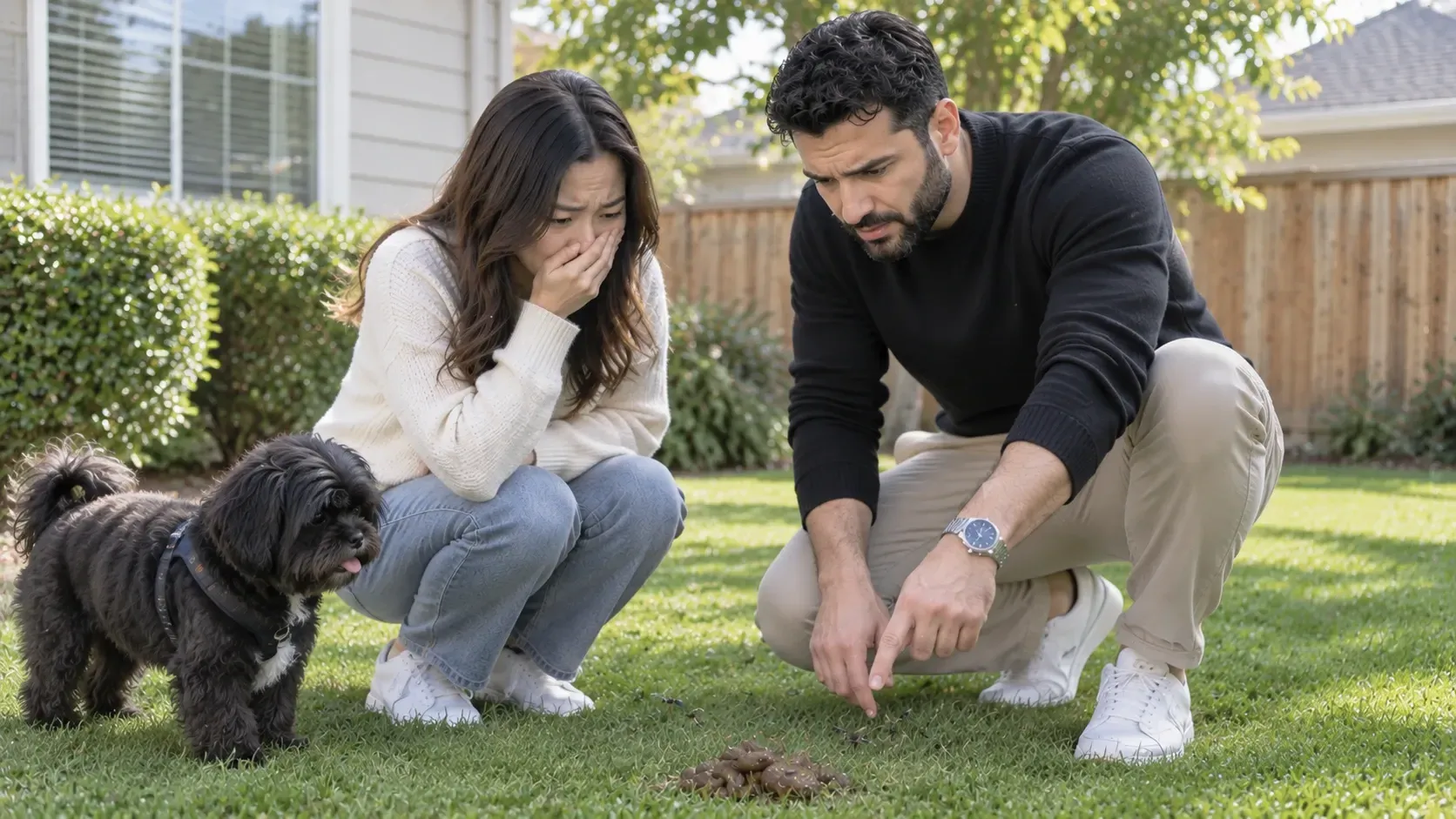
Picture a homeowner in the Colorado Springs area with two dogs and a backyard they clean up every couple of weeks. In late spring, they notice more flies near the patio, a faint smell by the fence line, and ants gathering around a few spots.
On a closer walk, they find several weeks' worth of waste near the fence that had been hidden under old snow, now thawed and breaking down. The flies and ants are gathering exactly where the buildup is thickest.
They clear the area, rinse the spot, and switch to a more consistent schedule. Over the next few weeks, the fly activity eases as the source disappears.
Now picture a second yard where waste is removed every few days. The same warm weather arrives, but there is far less for flies and ants to gather around, so the signs rarely show up at all.
This is a made-up example to show how timing and routine change the picture, not a real case or a guarantee of results.
A Simple Way to Check Your Yard
A quick walkthrough once a week can catch problems early. Consider running through these questions:
- Odor. Is there a smell in a specific area that seems stronger than usual?
- Flies and insects. Are insects concentrated in the same spot day after day?
- Rodent signs. Do you see droppings, burrows, or gnawed areas near fences, sheds, or woodpiles?
- Visible waste. Is there older, dried, or buried waste you missed?
- Pet behavior. Is your pet avoiding or fixating on a particular part of the yard?
If several answers point to the same area, that spot is a good place to start cleaning and watching.
How Often Should Pet Waste Be Removed?
In plain terms: Many people aim to remove pet waste at least once a week, and more often in summer or with multiple dogs. There is no single schedule that fits every yard, and the right frequency depends on how many pets you have, the size of the yard, and the season.
Factors That Change the Schedule
More animals mean more waste and a faster buildup. Warm weather speeds up odor and fly activity. A small yard can show problems sooner than a large one.
When Professional Help Can Make Sense
Some households and businesses prefer to hand this task off, especially with several pets, a large property, or limited time. Professional help can bring consistency, which is usually the hardest part to maintain on your own.
Common Misunderstandings About Pet Waste
"Pet waste is natural fertilizer, so it is fine to leave." Unlike some animal manures, dog waste is not generally treated as a garden fertilizer, and it can leave behind bacteria and odor. Leaving it is not the same as composting it.
"If it dries out, it is gone." Dried waste can still break down into the soil and may remain a source of odor and bacteria, especially after watering or rain.
"Snow will take care of it." Snow tends to hide waste, not remove it. Buildup often resurfaces when snow melts.
"I only need to clean up when I see a problem." By the time pests or odor are obvious, buildup has usually been there for a while. Regular cleanup is generally easier than reactive cleanup.
What General Online Advice Tends to Skip
Most articles say "pick up after your pet" and stop. That is good advice, but it leaves out a few practical realities.
Generic advice rarely addresses seasonality. In Colorado, the pattern of winter snow cover followed by a sudden spring thaw can create a surprise buildup that has little to do with how diligent someone is in summer.
It also skips the effort involved. For a yard with several dogs, doing this consistently can take real time, which is why routines often slip. A realistic schedule is better than an ideal one that does not last.
Business properties get overlooked too, since most advice is written for homeowners. Shared spaces can need a clearer system for who handles cleanup and how often. If you would rather not manage it yourself, landscaping help in Calhan can fit pet waste cleanup into a broader yard care routine, and ongoing property care in Colorado Springs is available for nearby properties.
Conclusion
You can usually tell pet waste buildup is attracting pests by looking for more flies, ants or other insects near waste, rodent signs around the yard, and lingering odor, especially when several of these appear together. Warm weather and spring snowmelt can make the signs show up quickly.
The practical takeaway is to check your yard regularly, remove waste on a consistent schedule, and pay extra attention in summer and after the snow melts. A steady routine is generally easier than catching up after buildup has grown.
This guide covers general principles only. For specific health or pest concerns, a veterinarian, local health department, or licensed pest professional can give guidance for your situation.
Need Help With Pet Waste Removal in Calhan, CO?
If keeping up with the yard feels like more than you want to manage, a little help can make it simpler. You are welcome to
reach out to our team
with questions about pet waste removal for your home or business, with no pressure and no obligation. The goal is simply to help you find a routine that works for your property.
Frequently Asked Questions
What are the first signs pet waste is attracting pests?
Often it starts with more flies than usual, ants gathering near waste, or a persistent odor in one part of the yard. Rodent droppings or burrows nearby can follow.
Can pet waste attract rodents?
It can. Rodents may be drawn by food residue in waste, especially when shelter is nearby. Waste is not always the cause, but it can contribute.
How often should I pick up pet waste in my yard?
Many people aim for at least weekly, and more often in summer or with multiple pets. The right schedule depends on your yard and number of animals.
Does snow get rid of pet waste?
No. Snow covers waste but does not remove it, and buildup often reappears during spring thaw.
Is pet waste a health concern?
It can carry bacteria and parasites, so regular cleanup and handwashing are sensible. For specific concerns, ask a veterinarian or your local health department.